
Claudine
Ask most people where sport comes from and they will name Ancient Greece, the first Olympic Games in 776 BC, or Victorian Britain, where football, rugby and tennis were given their modern rules. Both answers start the story far too late. Long before Olympia, the peoples of the Nile Valley, the Sahara, and West, East and Southern Africa were wrestling, running, swimming, shooting arrows, fighting with sticks and playing ball, and they left the evidence on tomb walls, rock faces and carved boards.
This is the history behind our documentary The African History of Sport (2018) and our series in development, The African Origin of Sport. Here are ten sports and games with African roots, what the evidence says, and where they are still played today.
1. Wrestling: the oldest sport on record
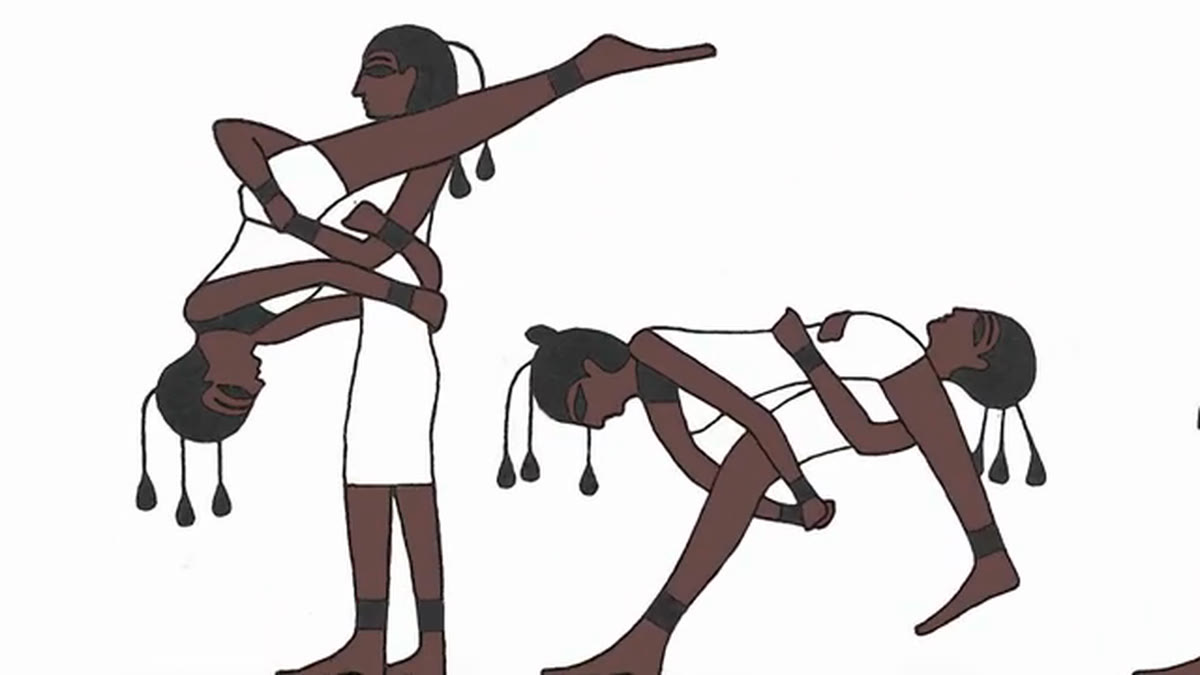
The walls of the rock-cut tombs at Beni Hasan, in Middle Egypt, carry one of the most detailed sporting records of the ancient world. Painted around 2000 BC for the regional governors Baqet III and Khety, they show hundreds of pairs of wrestlers, move by move, like frames of an instruction film: holds, throws, lifts and pins that any modern wrestling coach would recognise.
Wrestling was not only an Egyptian pastime. Egyptian art repeatedly shows Nubian wrestlers from the south, and wrestling remains at the heart of community life across the continent: Nuba wrestling in Sudan, and laamb in Senegal, a national sport whose champions fill stadiums and are household names.
2. Stick fighting: tahtib, donga and Nguni stick fighting
Stick fighting appears on ancient Egyptian tomb walls and survives today as tahtib, a stick game performed to music in Upper Egypt. In 2016 UNESCO added tahtib to its list of the Intangible Cultural Heritage of Humanity.
Further south, the Suri people of Ethiopia’s Omo Valley practise donga, a ceremonial duel with long poles, and in South Africa Nguni stick fighting is taught to boys as a test of skill, discipline and self-control. Fencing, kendo and modern martial arts belong to the same family of combat sports with a strict code of rules.
3. Hockey and stick-and-ball games
One of the Beni Hasan scenes shows two players with curved sticks contesting a ball between them. It is often cited as the earliest known picture of a hockey-like game, some four thousand years before the modern rules of field hockey were written in England.
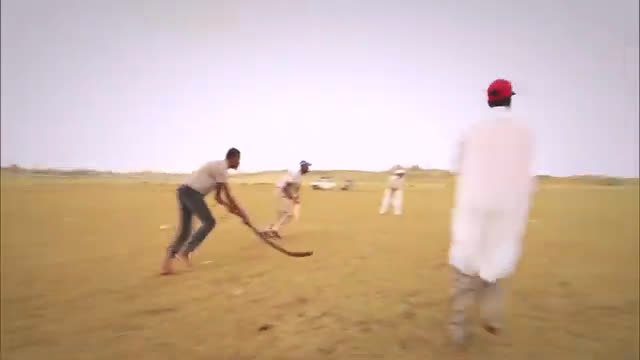
Stick-and-ball games are still played in villages across Africa, often at harvest time and between neighbouring communities, with rules that change from place to place.
4. Running: the pharaoh’s race
In ancient Egypt, running was a matter of state. At the Heb-Sed festival, held to renew a king’s power, the pharaoh had to run a ritual course to prove he was still fit to rule. At Saqqara, the funerary complex of King Djoser (around 2650 BC) includes a great court for the ceremony, with markers that are widely interpreted as the turning points of the run: one of the earliest sporting arenas we know of.
5. Archery and rowing: the athlete king
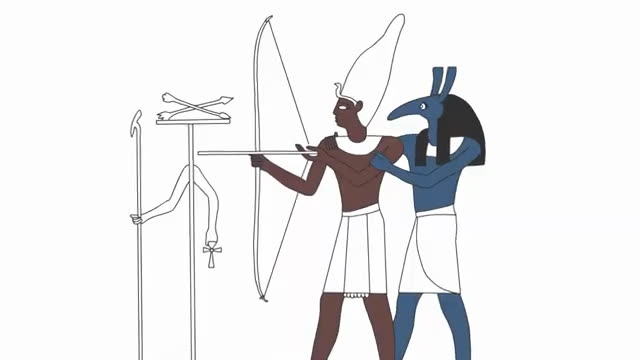
Pharaohs liked to be remembered as champions. On a stela set up beside the Great Sphinx at Giza, Amenhotep II (around 1420 BC) boasts that he shot arrows clean through thick copper targets from a moving chariot, and that he rowed farther than any of his crew. It reads very like a modern sports report: distances, equipment, rivals left behind.
6. Swimming
Ancient Egyptian writing has its own sign for a swimmer, and swimming was taught to the children of the elite. Older still are the rock paintings of the “Cave of Swimmers” in the Gilf Kebir, in Egypt’s Western Desert, where human figures appear to be swimming in what was once a green Sahara, thousands of years before the desert we know today.
7. Board games and mind sports: senet and mancala
Not every sport is physical. Senet, played in Egypt from around 3000 BC, is one of the oldest board games in the world; Tutankhamun was buried with several sets.
The mancala family of “count and capture” games, known as oware in Ghana and the Caribbean and bao in East Africa, is played across the whole continent and its diaspora. Archaeologists have found mancala boards at Aksumite sites in Ethiopia and Eritrea from the first millennium AD, and today oware has its own tournaments and world championships.
8. Dambe: Hausa boxing
Dambe is a form of boxing from the Hausa people of northern Nigeria, Niger and the surrounding region. Fighters strike with one bound fist, the “spear”, and guard with the open hand. It began among the butchers’ guilds, who travelled from village to village at harvest time to challenge local fighters, and today it has organised leagues and a large online following.
9. Engolo: the African root of capoeira
Engolo is a kicking and dodging game from southern Angola, played in a circle to music. Many historians trace capoeira, the Afro-Brazilian martial art now taught all over the world, back to engolo and to the Central Africans who were enslaved and taken to Brazil and who carried the game with them.
10. Ta kurt om el mahag: “Berber baseball”
In the 1930s, a Norwegian researcher recorded a bat-and-ball game played by Berber communities in Libya called ta kurt om el mahag, “the ball of the pilgrim’s mother”. Its batting, running and catching rules are so close to those of baseball and rounders that it is still discussed as a possible distant ancestor of the bat-and-ball games of Europe and America.
Why this history is still missing from the classroom
Most of this evidence has been known to archaeologists for more than a century. Yet in schools and in sports broadcasting the story of sport still usually begins in Greece. In ancient Africa, physical activity was not mere entertainment: it was tied to spiritual practice, medicine, military training and governance. The Egyptians even had a word for it, swtwt (“to make the heart light”).
That is the story Claudine Boothe has been telling on screen, and the reason we keep coming back to it.
Frequently asked questions
Which sports were invented in Africa?
The earliest evidence for wrestling, stick fighting, organised running, archery, swimming and hockey-like stick-and-ball games comes from Africa, above all from ancient Egypt and Nubia. Africa also gave the world board games such as senet and the mancala family (oware, bao), combat sports such as dambe, tahtib and Nguni stick fighting, and engolo, the ancestor of capoeira.
What is the oldest sport in Africa?
Wrestling has the strongest claim. The tomb paintings at Beni Hasan, around 4,000 years old, show hundreds of wrestling moves in detail, and wrestling is still a major sport in Senegal, Sudan, Nigeria and elsewhere.
Was hockey invented in Egypt?
Modern field hockey was codified in 19th-century England, but the oldest known image of a hockey-like game, two players with curved sticks and a ball, is painted on an Egyptian tomb at Beni Hasan, around 2000 BC.
Where can I watch a documentary about the African history of sport?
The African History of Sport (2018, 97 minutes), produced and directed by Claudine Boothe and narrated by historian Robin Walker, is streaming on Kush Cinema. All the links are on our Watch page.
Bring the story to your school, screen or channel
- Schools, universities and community groups: The African History of Sport is available for screenings, educational licences and Q&A sessions with the director, for Black History Month or any time of the year. See our page for educators and researchers.
- Broadcasters, streamers and co-producers: The African Origin of Sport is a six-part documentary series in development, available for commissioning, co-production and pre-sales.
- Press and researchers: stills and background material are on our press page.
Write to projects@bukimage.com.