
Miguel Taboada
The history of athletics in Africa as a modern sport begins at the 1904 Olympic Games, where two Tswana runners became the first Black Africans to compete, and turns in 1968, when Kenya and Ethiopia won the distance races in Mexico City. Since then African athletes have taken world titles in almost every event, from the steeplechase to the javelin, and in 2024 Letsile Tebogo of Botswana became Olympic 200 metres champion.
Running, jumping and throwing are far older than the modern Games, of course: Egyptian pharaohs ran ritual races thousands of years ago, as we explain in Sports Invented in Africa: 10 Games with Ancient Roots. This is the story of the modern track.
The early years: 1886 to 1960
Africans were winning races in Europe before there was an African team to run for. At the 1886 Amateur Athletic Association championships in London, Arthur Wharton, born in the Gold Coast (today Ghana), ran 100 yards in 10 seconds, equalling the amateur world record of the time; we tell his story in First Black Professional Footballer: Arthur Wharton.
At the Olympics, the first milestones came under colonial flags or for colonial powers:
- 1904, St Louis: Len Taunyane and Jan Mashiani, two Tswana runners from South Africa, ran the marathon, the first Black Africans at the modern Games.
- 1908, London: South Africa’s Reggie Walker won the 100 metres.
- 1928, Amsterdam: the Algerian-born Boughera El Ouafi won the marathon for France.
- 1960, Rome: Abebe Bikila of Ethiopia won the marathon barefoot, the first Black African Olympic champion.
Who counts as the “first” depends on the definition, as we explain in First African Olympic Gold Medalist: Who Was It Really?
1965 to 1968: Africa takes the start line
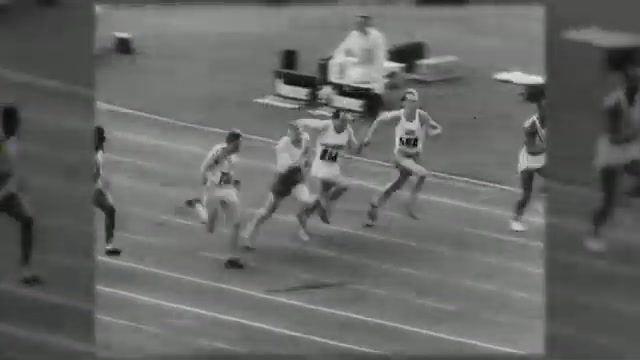
Independence brought national teams and a continental stage. The first All-Africa Games were held in Brazzaville in 1965, and the Kenyan runner Kipchoge “Kip” Keino won both the 1500 and 5000 metres there.
Three years later, at the altitude of Mexico City, African runners dominated the distance events:
- Kip Keino won the 1500 metres, beating the American world record holder Jim Ryun by about 20 metres, the largest winning margin in the history of the event, and took silver in the 5000 metres.
- Naftali Temu won the 10,000 metres, Kenya’s first Olympic gold medal.
- Amos Biwott won the 3000 metres steeplechase.
- Mamo Wolde of Ethiopia won the marathon.
Keino added the steeplechase title in Munich in 1972. The event became a Kenyan speciality: Kenyan men won it at every Olympic Games they entered from 1968 to 2016, until Morocco’s Soufiane El Bakkali broke the streak in Tokyo.
1976: the boycott
Politics shaped the next decade. In 1976 twenty-nine countries, most of them African, boycotted the Montreal Olympics after the International Olympic Committee refused to ban New Zealand, whose rugby team had toured apartheid South Africa that year. The boycott was led by the Congolese official Jean-Claude Ganga; Senegal and Ivory Coast were the only African countries that competed throughout the Games.
South Africa itself had been barred from the Olympics after 1960 because of apartheid. It returned in Barcelona in 1992.
The World Championships era
When the first World Athletics Championships were held in Helsinki in 1983, Africa won only three of the 123 medals. Nigeria’s Ajayi Agbebaku, bronze in the triple jump, was the first African medallist. Four years later in Rome, Kenya’s Paul Kipkoech won the 10,000 metres to become the continent’s first world champion, one of five African golds at those championships.
Tokyo 1991 broke two patterns. Zambia’s Samuel Matete won the 400 metres hurdles, the first African world title outside the middle and long distances, and Algeria’s Hassiba Boulmerka won the 1500 metres, the first world medal of any colour for an African woman. A year later she was Olympic champion in Barcelona.
Then came the great distance runners:
- Noureddine Morceli (Algeria): three world 1500 metres titles in a row, 1991 to 1995, and Olympic gold in Atlanta in 1996.
- Hicham El Guerrouj (Morocco): four world 1500 metres titles from 1997 to 2003, the 1500 and 5000 metres double at the Athens Olympics in 2004, and a 1500 metres world record of 3:26.00, set in Rome in 1998.
- Haile Gebrselassie (Ethiopia): four consecutive world 10,000 metres titles, 1993 to 1999, and two Olympic golds.
Women, sprinters and throwers
The first African woman to become Olympic champion was Morocco’s Nawal El Moutawakel, in the 400 metres hurdles at Los Angeles in 1984; Ethiopia’s Derartu Tulu followed in the 10,000 metres in 1992. At the 2005 World Championships Tirunesh Dibaba became the first athlete, male or female, to win the 5000 and 10,000 metres at the same championships, and in 2008 the first woman to do the double at the same Olympics.
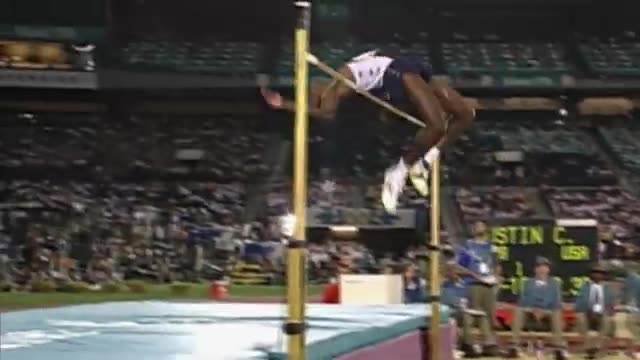
The 2000s and 2010s widened the map beyond distance running:
- 2001: Senegal’s Amy Mbacke Thiam won the world 400 metres, the first sprint title for an African woman, and South Africa’s Hestrie Cloete took the high jump.
- 2015: Kenya topped the World Championships medal table for the first time, with seven golds, including Julius Yego in the javelin.
- 2016: South Africa’s Wayde van Niekerk broke Michael Johnson’s 400 metres world record at the Rio Olympics, running 43.03 from lane eight.
Marathon records and Paris 2024
On the roads, Kenya’s Eliud Kipchoge won the Olympic marathon in 2016 and 2020. His compatriot Kelvin Kiptum set a world record of 2:00:35 in Chicago on 8 October 2023, and died in a car crash in Kenya in February 2024, aged 24.
At the Paris Olympics in 2024, Letsile Tebogo won the 200 metres, the first Olympic gold medal in Botswana’s history. Kenya’s Faith Kipyegon became the only three-time Olympic champion in the 1500 metres, and Soufiane El Bakkali won the steeplechase again.
Why this history matters
African athletics is often reduced to the image of a barefoot distance runner. The real history is wider: sprinters, hurdlers and throwers, athletes who ran for colonial powers before their own countries existed, and a continent that used the boycott against apartheid.
Claudine Boothe’s documentary The African History of Sport (2018) traces the African origins of Olympic and popular sports and pays tribute to the athletes who challenged the notion of racial supremacy. For the story of the other global game, read our History of Football in Africa.
Frequently asked questions
When did the history of athletics in Africa begin?
Running and jumping were practised in ancient Egypt thousands of years ago. The modern history of athletics in Africa begins at the 1904 Olympic Games in St Louis, where Len Taunyane and Jan Mashiani became the first Black Africans to compete.
Who was the first African world champion in athletics?
Kenya’s Paul Kipkoech, who won the 10,000 metres at the 1987 World Championships in Rome. The first African woman to win a world title was Algeria’s Hassiba Boulmerka, in the 1500 metres in Tokyo in 1991.
Why did African countries boycott the 1976 Olympics?
Because the International Olympic Committee refused to ban New Zealand, whose rugby team had toured apartheid South Africa in 1976. Twenty-nine countries, most of them African, stayed away from the Montreal Games.
When did Kenya first win Olympic gold in athletics?
In Mexico City in 1968, when Naftali Temu won the 10,000 metres. At the same Games Kip Keino won the 1500 metres and Amos Biwott the 3000 metres steeplechase.
Who won Botswana’s first Olympic gold medal?
Letsile Tebogo, in the men’s 200 metres at the Paris Olympics in 2024.
Bring these stories to the screen
Best UK Images makes documentaries about Black history, sport and culture, from The African History of Sport to Skin and Coal, with new series in development such as The African Origin of Sport. You can watch our films, find resources for educators and material for the press. For screenings, licences or co-productions, write to projects@bukimage.com.