
Miguel Taboada
The first Black professional footballer was Arthur Wharton (1865–1930), a goalkeeper born in Jamestown, Gold Coast (now part of Accra, Ghana), who signed as a professional for Rotherham Town in 1889. In the 1894–95 season, playing for Sheffield United, he also became the first player of African descent to appear in the top division of the Football League. He ended his working life underground, as a miner in the Yorkshire coalfield.
Wharton’s story brings together almost everything we make films about at Best UK Images: African heritage, sport, and the Black workers of Britain’s pits. Here is what is known about him, and why his name was almost forgotten.
Who was Arthur Wharton?
Arthur Wharton was born on 28 October 1865 in Jamestown, on the Gold Coast. His father, Henry Wharton, was a Methodist missionary from Grenada of Scottish and West African descent; his mother, Annie Florence Egyriba, came from a Fante royal family. He was educated at Mfantsipim School and moved to England in 1882 to train as a Methodist missionary.
He soon gave that up for sport. An all-round athlete who also cycled and played cricket in Yorkshire and Lancashire, he made his name first on the track and then in goal.
A sprinter before he was a goalkeeper
In 1886, at the Amateur Athletic Association (AAA) championships, Wharton ran 100 yards in 10 seconds, equalling the amateur world record of the time. For several years running mattered to him more than football: it was to concentrate on athletics that he left Preston North End in 1888.
Was he really the first Black footballer?
Not quite, and the distinction matters. Two Black players in Scotland came before him as amateurs: Robert Walker of Queen’s Park, and Andrew Watson, who won three caps for Scotland between 1881 and 1882 and is regarded as the first Black international footballer. There is also evidence that Watson was paid while playing for Bootle in 1887, two years before Wharton turned professional, but Bootle was not then a Football League club.
That is why historians describe Wharton as the first Black professional footballer and the first Black player in the Football League, rather than the first Black footballer outright.
Arthur Wharton’s football career, club by club
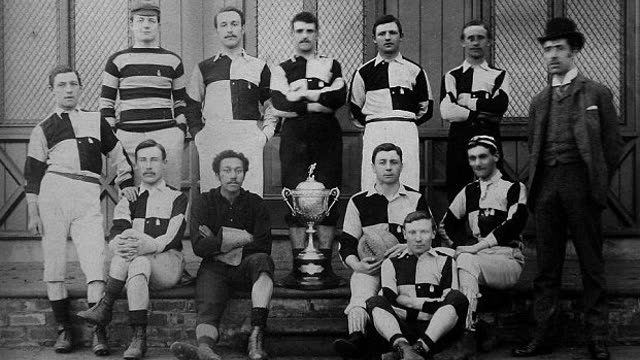
- Darlington (amateur). Wharton began in goal at Darlington, where Preston North End spotted him after playing against them.
- Preston North End (amateur). He was part of the side that reached the FA Cup semi-finals in 1886–87. After a clean sheet against Renton, the Athletic News called his display “one of the best exhibitions of goalkeeping I have seen for a long time.” He left in 1888, before Preston’s “Invincibles” won the Double in 1888–89.
- Rotherham Town, from 1889: his first contract as a professional. He married Emma Lister in Rotherham in 1890 and by 1891 was landlord of the Albert Tavern.
- Sheffield United, from 1894, as understudy to the famous goalkeeper William “Fatty” Foulke. He played three games in 1894–95, against Leicester Fosse, Linfield and Sunderland; the Sunderland match was in the First Division.
- Stalybridge Rovers (1895), Ashton North End (1897, where he also opened a tobacconist’s shop in Ashton-under-Lyne), Stalybridge again from 1899, alongside a young Herbert Chapman, and finally Stockport County in the Second Division in 1901–02.
From the goalmouth to the coal face
Wharton retired from football in 1902, by then struggling with drink. He found work in the South Yorkshire coalfield as a haulage hand at Yorkshire Main Colliery in Edlington, near Doncaster, and the 1911 census records him as a collier living in Moorthorpe, West Yorkshire, with Emma. When the First World War began he joined the Volunteer Training Corps, a home-defence force.
He died on 12 December 1930 and was buried in an unmarked pauper’s grave. The man who had once equalled a world record and kept goal in the First Division left almost no trace in the official story of English football.
His last job links him to a history we know well. Half a century later, Claudine Boothe filmed Skin and Coal (1986) in Doncaster, Leeds and Nottingham: two generations of coal miners of African and Caribbean descent, telling their own story. Wharton was working in those same Yorkshire pits long before them. We look at that history in Black Coal Miners in Britain: Skin and Coal at 40.
How is Arthur Wharton remembered today?
His reputation was rebuilt, slowly, from the 1990s onwards:
- 1997: his grave was given a headstone after a campaign by the anti-racism group Football Unites, Racism Divides.
- 1998: the historian Phil Vasili published the biography The First Black Footballer, Arthur Wharton, 1865–1930: An Absence of Memory (Frank Cass).
- 2003: he was inducted into the English Football Hall of Fame.
- 2012: a small statue of Wharton was presented to FIFA for permanent display at its headquarters.
- 16 October 2014: a statue of Wharton was unveiled at St George’s Park, the national football centre in Burton.
- 2020: a mural was unveiled in Darlington on the 155th anniversary of his birth.
Why his story still matters
Wharton was born in October, the month Britain now marks as Black History Month, and his life shows why that month exists: a record-equalling sprinter and First Division footballer who was soon close to forgotten. For our list of films that tell this kind of story, see Black British History Documentaries: 7 Essential Films.
He also belongs to a much longer story. Wrestling, stick fighting, running and ball games were played in Africa thousands of years before modern football was codified in England, as we explain in Sports Invented in Africa: 10 Games with Ancient Roots. Claudine Boothe’s documentary The African History of Sport (2018) traces that heritage and pays tribute to athletes who challenged the notion of racial supremacy, as Wharton did on the track and in goal.
Frequently asked questions
Who was the first Black professional footballer?
Arthur Wharton (1865–1930), a goalkeeper born in Jamestown, Gold Coast (now Accra, Ghana). He signed as a professional for Rotherham Town in 1889 and is widely considered the first Black professional footballer in the world and the first Black player in the Football League.
Was Arthur Wharton the first Black footballer?
No. Robert Walker of Queen’s Park and Andrew Watson, who played three times for Scotland between 1881 and 1882, came before him as amateurs. Watson may have been paid at Bootle in 1887, but Bootle was not a Football League club at the time.
Which clubs did Arthur Wharton play for?
Darlington, Preston North End, Rotherham Town, Sheffield United, Stalybridge Rovers, Ashton North End and Stockport County. With Sheffield United he played in the First Division in the 1894–95 season.
How fast was Arthur Wharton?
At the 1886 AAA championships he ran 100 yards in 10 seconds, equalling the amateur world record of the time.
Where is Arthur Wharton remembered?
His grave has had a headstone since 1997, he was inducted into the English Football Hall of Fame in 2003, a statue of him was unveiled at St George’s Park in Burton on 16 October 2014, and a mural was unveiled in Darlington in 2020.
Bring these stories to the screen
Best UK Images makes documentaries about Black history, sport and culture, from Skin and Coal to The African History of Sport, with new series in development such as The African Origin of Sport. You can watch our films, find resources for educators and material for the press. For screenings, licences or co-productions, write to projects@bukimage.com.